15 Weird Websites to Visit When the Normal Internet Gets Boring
From shark trackers and barking translators to audible Wikipedia edits, these weird websites make the internet feel strange again.
By Bored Hoard

The normal internet is very good at giving you more of what you already know. Weird websites do the opposite. They answer questions nobody asked, turn public data into art and build entire experiences around ideas that should probably have remained shower thoughts.
These 15 weird websites to visit when bored are strange for different reasons. Some are funny, some are unexpectedly useful and a few are genuinely beautiful. None of them feels like another infinite feed.
Quick picks: try How Many People Are in Space Right Now? for an oddly specific answer, Hatnote to hear Wikipedia being edited, OCEARCH to follow sharks or Midnight Pub for a quiet corner of the small web.
Content note: Hood Maps contains labels written by users, so expect profanity, stereotypes and opinions that have not been vetted by Bored Hoard.
Websites answering questions nobody thought to ask

1. How Many People Are in Space Right Now?
The title is the entire pitch. Open the page and it tells you how many humans are currently beyond Earth, with a simple list of who they are.
It is the sort of fact you may never need but will immediately want to know. The number changes with launches and returns, which gives this wonderfully specific website a reason to keep existing.
Best for: settling a question that appeared in your head for no defensible reason.

2. Where is Roadster?
A Tesla Roadster and its mannequin passenger, Starman, have been orbiting the Sun since the first Falcon Heavy launch in 2018. This independent tracker follows their estimated position and translates the journey into distances, orbits and increasingly ridiculous comparisons.
The concept sounds like science fiction, but the object really is out there. The site turns one extravagant space stunt into a long-running astronomical road trip.
Best for: checking whether a car in space has exceeded its warranty yet.

3. What's My Starbucks Name?
Enter your name and this generator predicts the creative interpretation a distracted barista might write on your cup. A perfectly ordinary name can return looking like a newly discovered species.
It is a one-joke website, but it understands the assignment and delivers the result instantly. Try the names of everyone you know and decide who received the greatest insult.
Best for: people who have never experienced the character-building power of a misspelled coffee order.
4. ThanAverage
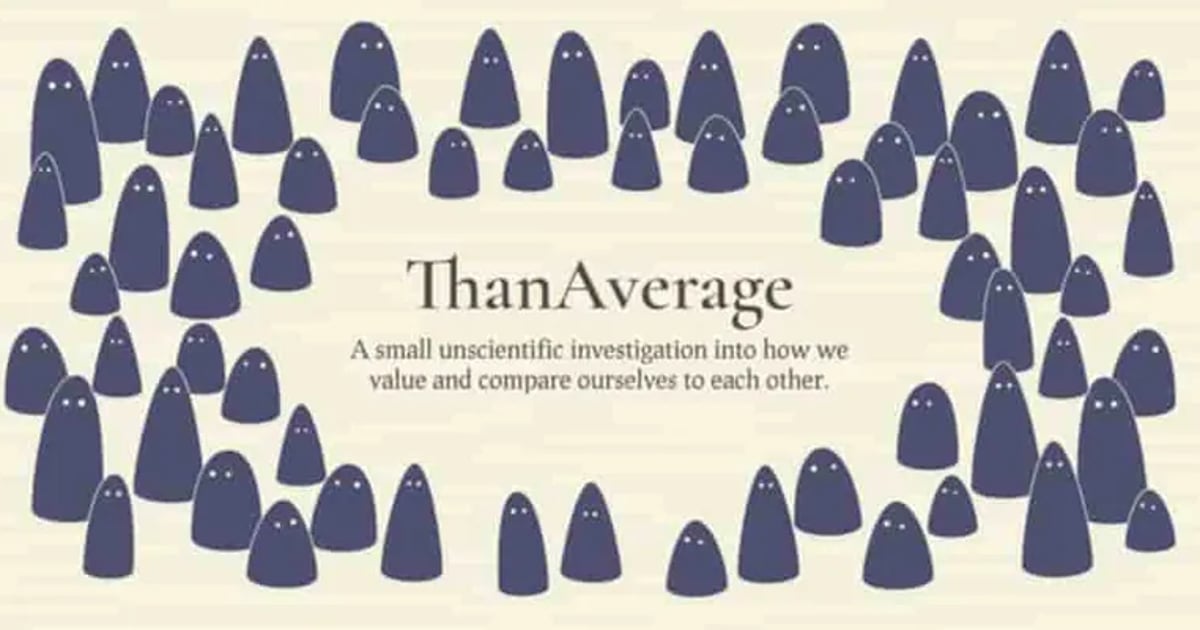
ThanAverage asks you to compare yourself with an imaginary room of 100 peers. Are you kinder than average? More attractive? More likely to make good decisions? Answer honestly—or as honestly as your ego allows—and see how other visitors judged themselves.
It calls itself an unscientific investigation, which is important. The interesting part is not learning your rank but noticing how strange human self-perception becomes when everyone thinks they are above average.
Best for: a small identity crisis disguised as a questionnaire.
When internet data becomes art
5. Hatnote: Listen to Wikipedia
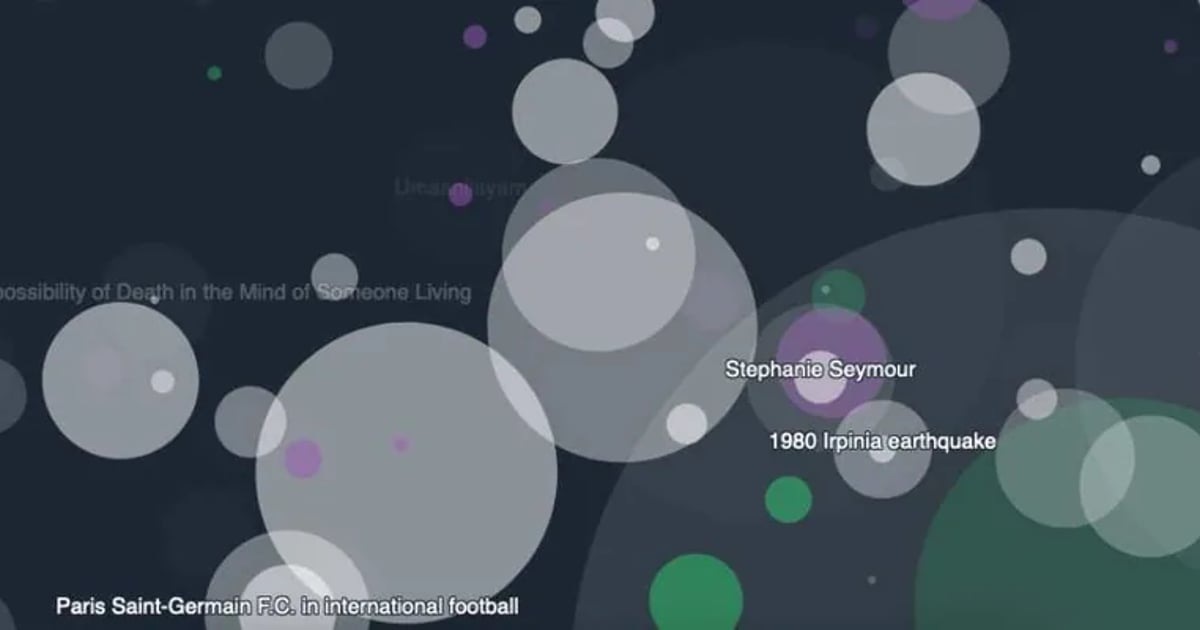
Hatnote turns Wikipedia's live edit stream into an ambient audiovisual performance. Additions create bell tones, removals produce string plucks and the pitch changes with the size of each edit.
Circles bloom across the screen while people and bots quietly rewrite the world's largest encyclopedia. What normally looks like dry activity data suddenly feels alive.
Best for: background sound with a direct connection to humans sharing knowledge.
6. Groove Pizza
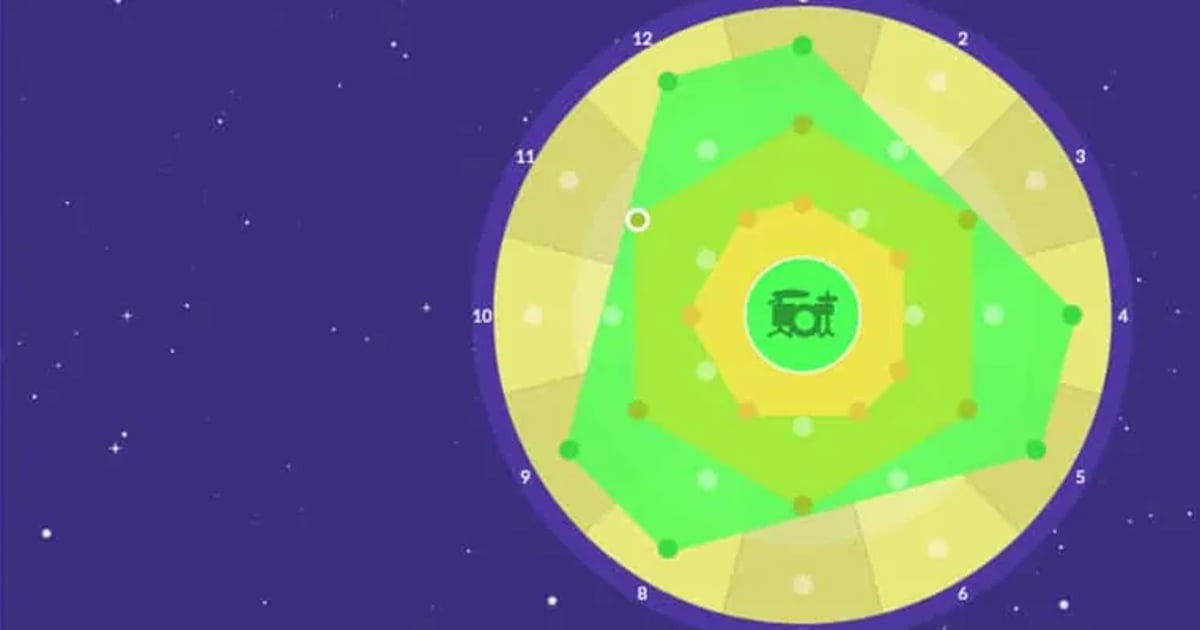
Groove Pizza is a drum sequencer shaped like a pizza. Beats sit around a circular grid, and changing the slices creates different rhythmic patterns.
The food metaphor makes musical structure surprisingly easy to see. You can experiment without knowing music theory, then discover that the questionable pizza you assembled has a respectable groove.
Best for: making beats while pretending the toppings are a serious compositional system.
7. Superformula
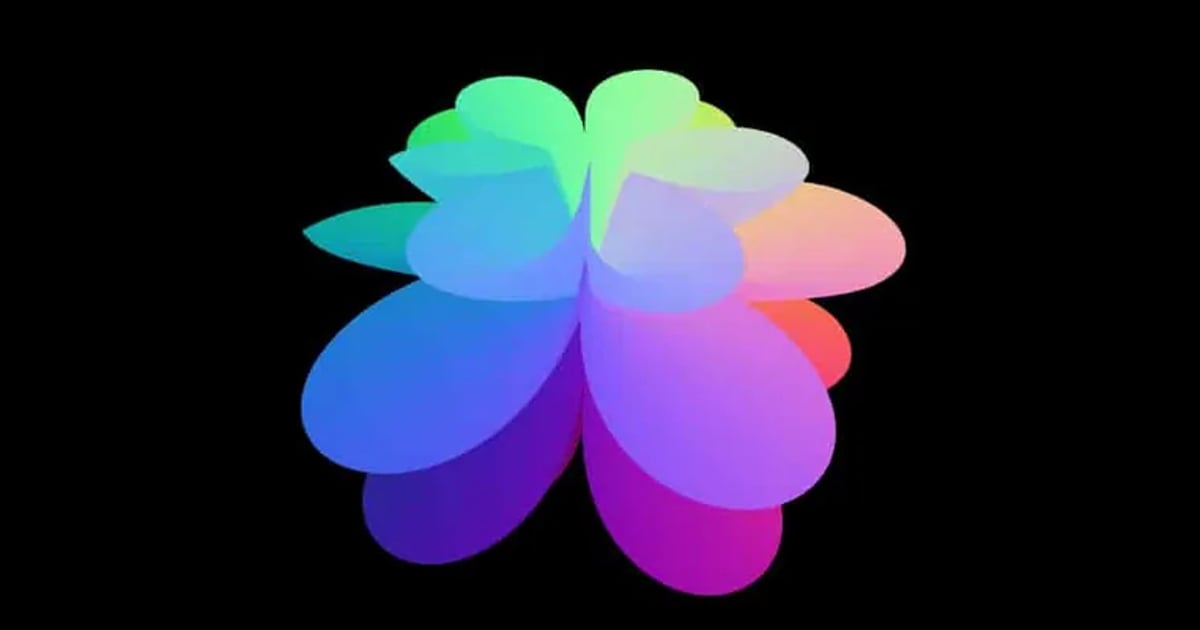
A superformula can generate an enormous range of organic-looking shapes from a small set of mathematical controls. This interactive version lets you drag those controls and watch a clean geometric form become a flower, starfish, cell or unclassifiable blob.
You do not need to understand the equation. The pleasure comes from pushing one number slightly too far and discovering a shape that looks suspiciously alive.
Best for: mathematical doodling without the mathematics homework.
8. PLINK!
PLINK! places you in a shared musical space with strangers. Move the pointer, click to play notes and listen as the room gradually becomes a collaborative electronic jam.
There is no score to chase and very little explanation. The weirdness comes from making something coherent with people you cannot see and may never encounter again.
Best for: headphones, improvisation and five minutes of low-pressure collaboration.
Maps of things you did not know needed maps

9. OCEARCH Shark Tracker
OCEARCH maps the recent satellite pings of tagged sharks and other marine animals. Choose an individual animal, inspect its travel history and suddenly realise a shark has a more interesting itinerary than most people.
The map is built around real research, but it also creates an oddly personal experience. The animals have names, paths and long gaps between appearances that make each new ping feel like a postcard from the ocean.
Best for: following a great white shark from the safety of your sofa.

10. Falling Fruit
Falling Fruit is a community map of edible plants growing in public spaces. Its enormous database includes fruit trees, herbs, nuts and other forageable food hiding in cities and rural areas.
A street you thought contained only parked cars may also contain apples, rosemary or a neglected plum tree. Check local rules and identify anything carefully before eating it—the map is a starting point, not a guarantee.
Best for: discovering that your neighbourhood is quietly producing snacks.
11. Radio Garden
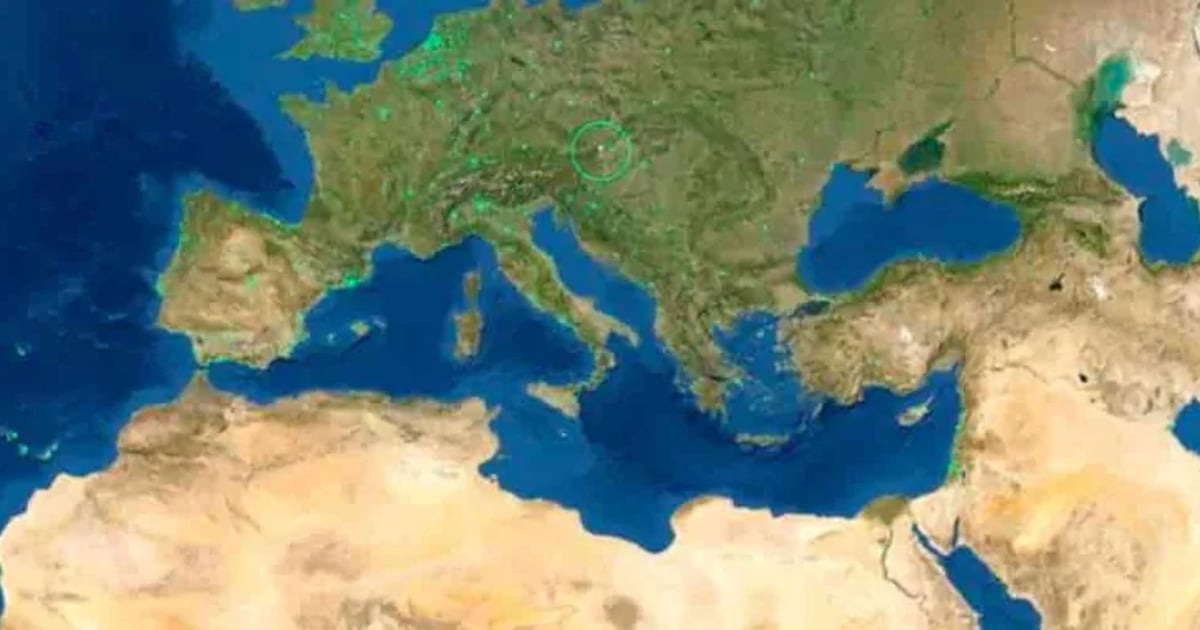
Spin a digital globe, stop on a green dot and listen to a live radio station broadcasting from that location. In seconds you can move from a morning talk show in Iceland to dance music in Brazil or a tiny community station on an island you had never heard of.
The technology is straightforward; the feeling is not. Radio Garden makes the planet seem enormous and connected at exactly the same time.
Best for: travelling without maps, plans or airport security.
12. Hood Maps
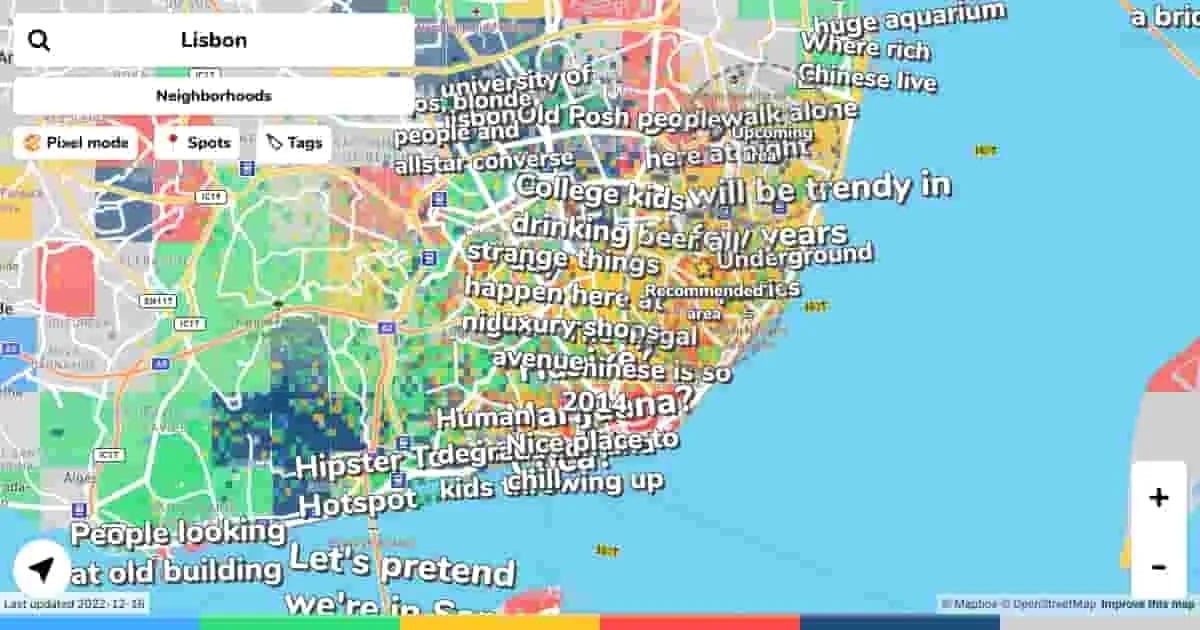
Hood Maps covers cities with crowdsourced labels describing how people perceive individual neighbourhoods. Some are useful, many are sarcastic and others are the kind of local joke that makes no sense until you have lived there for five years.
Treat it as a messy cultural artefact rather than a travel guide. The map reveals as much about the people writing the labels as the places underneath them.
Best for: seeing your city described by its least diplomatic residents. Contains unmoderated user-written language and stereotypes.
Small-web ideas that should not work but do

13. Always Judge a Book by Its Cover
This collection celebrates real books with titles and covers too strange to ignore. Subjects include cat gun safety, garden-gnome attacks, extreme ironing and the identification of wood.
Each entry includes a deadpan review that commits fully to the premise. You arrive for one cover and leave knowing that somebody published an entire field guide to dumb birds.
Best for: proof that physical publishing can be every bit as weird as the web.
14. Midnight Pub
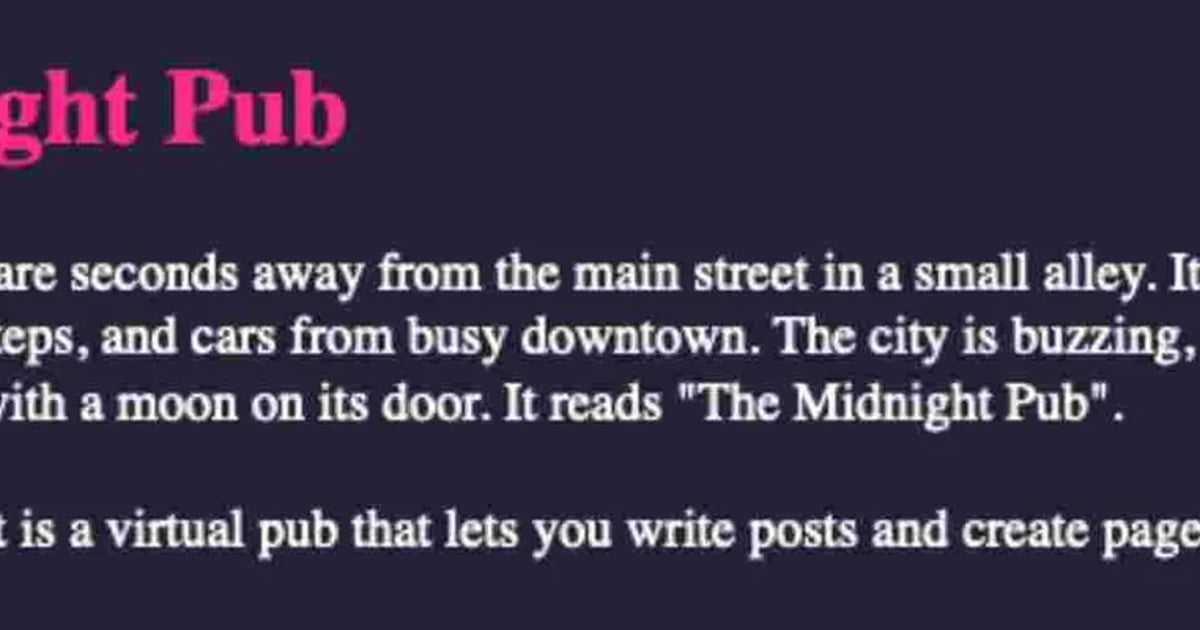
Midnight Pub is a writing community presented as a quiet virtual bar hidden down an alley. The homepage uses ASCII art, posts feel like conversations between regulars and the whole place deliberately resists the polished shape of modern social platforms.
You can read without joining. It is less a website pretending to be a pub than a pub built from text, hyperlinks and people who still enjoy the small web.
Best for: thoughtful wandering after the noisy part of the internet has closed.

15. Toucan Bark Translator
Type a phrase and this experiment translates it into barks for your dog. Whether your dog considers the result meaningful is a question for canine linguistics, but pressing a button and hearing “Do you want a snack?” transformed into enthusiastic woofs is strange enough to justify the visit.
Your dog may tilt its head, leave the room or finally understand everything. Bored Hoard cannot guarantee which.
Best for: attempting diplomacy with the least cooperative member of the household.
Which weird website should you visit first?
Start with Hatnote if you want something quietly beautiful, What's My Starbucks Name? for a ten-second joke, Radio Garden for a genuine rabbit hole or ThanAverage if you are prepared to question your self-image.
For the purest “why does this exist?” energy, choose How Many People Are in Space Right Now? or Toucan Bark Translator.
These sites overlap with our collections of random websites, funny websites and satisfying websites, but weirdness is the main attraction here. Each project takes an unusual idea seriously enough to make it work.
If you want a broader starting point, explore our guide to fun, cool and interesting websites.
Frequently asked questions
What are some weird websites to visit when bored?
Try Hatnote to hear Wikipedia edits, Radio Garden to explore live stations around the world, OCEARCH to track sharks, ThanAverage to compare yourself with strangers or Toucan's Bark Translator to communicate badly with your dog.
Are these weird websites free?
All 15 websites can be explored for free. Some include optional accounts, donations, merchandise or external services, but the central experience does not require payment.
Which weird websites are safe for work?
Hatnote, Groove Pizza, Superformula, OCEARCH, Falling Fruit and Radio Garden are good work-safe starting points. Hood Maps contains unmoderated crowdsourced labels and may display profanity or offensive stereotypes.
Do these websites require an account?
Most work immediately without registration. Midnight Pub needs an account only if you want to publish, while the other entries provide their main experience without one.
What makes a website weird?
A weird website usually builds an unusually specific idea with more care than the idea seems to deserve. The best examples are not merely confusing: they are interactive, memorable and difficult to replace with an ordinary app or social feed.